Gum Hyperplasia
Gum Hyperplasia
If your pet shows excessive growth or thickening of gum tissue, he/she might have gum hyperplasia.

Originally published by Stephen Juriga, DVM · part of the AOSN network.
Signs you might notice
What you need to know
Enlargement of the gums create a “pocket” and can result in bone loss and infection.
What you need to know
Inflammation may be due to bacteria and plaque.
What you need to know
It can also be a reaction to certain medications like Cyclosporine or Amlodipine.
What's really going on
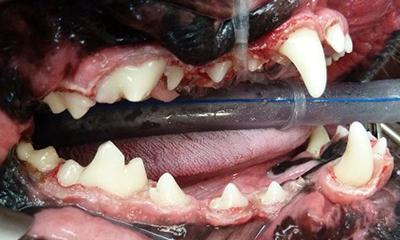
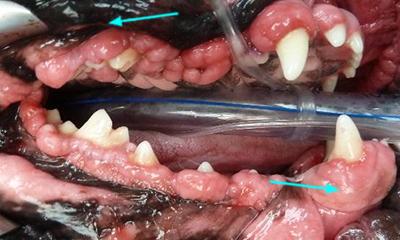
Gingival hyperplasia is excessive growth or thickening of gum tissue. This condition is more common in Boxers, Great Danes, Collies, Mastiffs, and Retriever breeds but may be seen in any breed. The hyperplasia is the result of inflammation due to bacteria and plaque or can occur secondary to certain medications (eg. Cyclosporine or Amlodipine).
Treatment involves an oral examination, dental x-rays and biopsy. Patients receive surgical excision (gingivectomy) to restore the normal contour and height of the gum tissue. Prevention involves daily plaque control (brushing), regular professional teeth cleanings and in cases secondary to medication alternative drug therapy can be considered.
How it may look
How a specialist helps
Schedule an appointment to have your pet evaluated by clicking on the “Get In Touch with Us” button.
Possible therapy / treatment