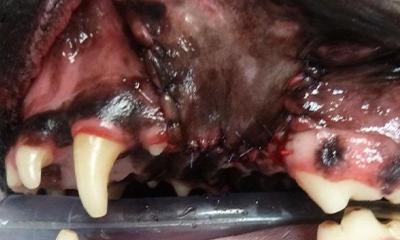
Benign Oral Mass
Benign Oral Mass
Benign tumors are a mass of cells/tumors that lack the ability to invade neighboring tissue and will not metastasize or spread.

Originally published by Stephen Juriga, DVM · part of the AOSN network.
Signs you might notice
What you need to know
Benign tumors are not cancerous.
What you need to know
Most of these tumors can be surgically removed, and patients return to eating and play shortly thereafter.
What's really going on
A thorough examination under anesthesia with dental x-rays, biopsy, and oral surgery are performed. The biopsy is submitted to a board certified pathologist. He/she will examine the tissue to determine the cell type and make a diagnosis of a specific tumor that is present. Surgical excision is the preferred treatment in the majority of cases. For the most common benign masses (fibromatous or ossifying epulus) a marginal excision (3-5 mm of normal tissue) is adequate while an invasive benign mass (Acanthommatous Ameloblastoma) will require 1 cm of normal tissue).
Schedule an appointment to have your pet evaluated by clicking on the “Get In Touch with Us” button.
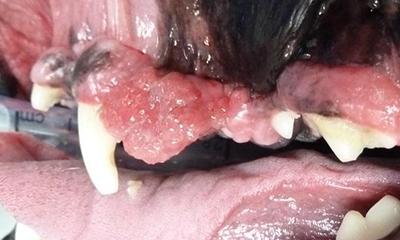
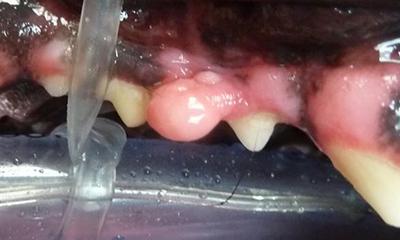
How it may look
How a specialist helps
Surgical excision is the preferred treatment in the majority of cases. For the most common benign oral masses, a marginal excision is adequate while an invasive benign mass will require 1 cm of normal tissue.
Possible therapy / treatment