

Tooth Resorption
Tooth Resorption
Tooth resorptive lesions are like our cavities; progressive and painful. Make sure your cat is examined for this common dental condition.

Originally published by Stephen Juriga, DVM · part of the AOSN network.
Signs you might notice
What you need to know
A common feline dental problem.
What you need to know
Most cats will show no symptoms at all but this condition is painful.
What you need to know
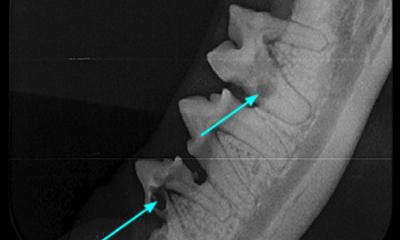
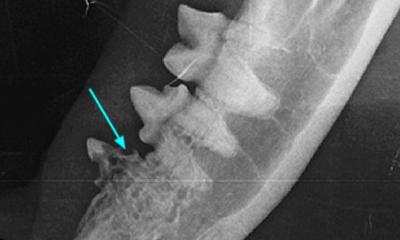
Dental x-rays are needed to identify any or all lesions that are present as well as direct how the root structure has been affected.
What's really going on
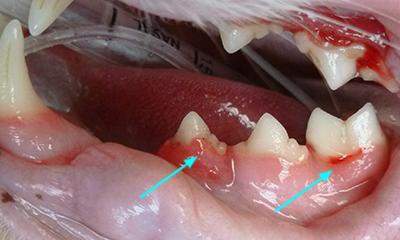
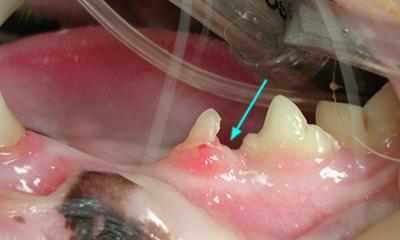
Tooth Resorption (TR) is a common feline dental problem. A recent study has shown an incidence of 70% in purebred cats and 40% incidence in mixed breeds. Some cats may chatter or have shift food in their mouth, however, most cats will show no symptoms at all. These lesions are painful and progressively destroy the tooth.
Careful probing of the teeth at the gingival margin with an explorer and a full mouth x-ray series (8-views) will identify these lesions and direct the treatment plan during the cat’s dental procedure. Based on the radiographic appearance of the root structure the affected tooth/teeth will receive either surgical extraction (crown & roots) or crown amputation.
How it may look
How a specialist helps
Careful probing of the teeth at the gingival margin and a full mouth x-ray will help identify these lesions for the development of a treatment plan.
Schedule an appointment to have your pet evaluated by clicking on the “Get In Touch with Us” button.