

Cloudiness or trouble seeing
Has your pet's eye turned cloudy — or are they bumping into things?
A cloudy eye, a pet that's started bumping into furniture, or trouble seeing at night can point to cataracts or retinal disease. A specialist pinpoints the cause and, when possible, restores or preserves your pet's sight.
Signs you might notice
Cloudy or bluish eye
A haze or milky look to one or both eyes
Bumping into things
Misjudging furniture, steps, or doorways
Trouble in dim light
Hesitant on stairs or outside at night
Reluctance or clinginess
Hesitating in new places or staying close to you
What's really going on
Not all cloudiness is the same. Some is a normal aging change in the lens that barely affects vision — and some is a cataract or disease of the retina that steadily takes sight away. From the outside, they can look nearly identical.
Pets also adapt remarkably well and often hide vision loss, especially while one eye still works. By the time they bump into things, the problem may already be advanced — so an early exam matters.
How a specialist helps
A board-certified veterinary ophthalmologist can tell the harmless changes from the sight-threatening ones with a detailed exam of the lens and retina. When cataracts are the cause, surgery can often restore vision — and when the retina is involved, early diagnosis gives you the best chance to slow or manage the disease.
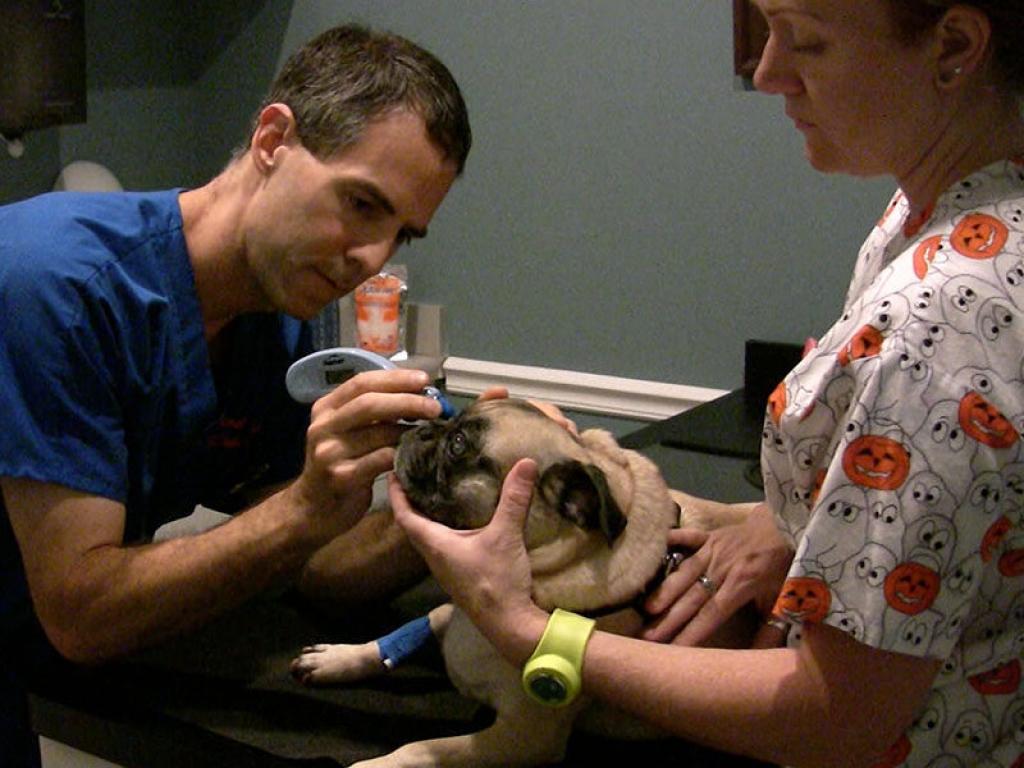
What to expect at your visit
- A conversation about the changes you've noticed at home
- A vision assessment and a thorough exam of the lens and retina
- A clear answer on what's causing the cloudiness or vision loss
- A plan — from monitoring to surgery — matched to your pet's diagnosis