

Corneal Conditions
Does your pet have a sore or cloudy spot on the eye that won't heal?
The clear front surface of the eye can be scratched or ulcerated, causing squinting, tearing, redness, and cloudiness. An ophthalmologist heals the cornea and treats the underlying cause so the problem doesn't keep coming back.
Signs you might notice
Squinting and tearing
An eye held shut, watering more than usual
A visible spot or haze
A dull, cloudy, or discolored area on the eye's surface
Redness
Irritated, bloodshot tissue around the eye
Slow or no healing
A sore that lingers or returns despite treatment
What's really going on
The cornea is the clear windshield of the eye — and scratches or ulcers on it are both painful and risky. A shallow scrape can heal quickly, but some ulcers deepen fast, and others refuse to heal because of an underlying reason: a lash or lid rubbing, low tear production, or infection.
When an ulcer keeps coming back or won't close, treating the surface alone isn't enough — the underlying cause has to be found.
How a specialist helps
A board-certified veterinary ophthalmologist examines the cornea under high magnification, identifies why it isn't healing, and treats both the ulcer and its cause. For deep or stubborn ulcers, specialized procedures — up to delicate corneal surgery — can save the eye's clarity and comfort.
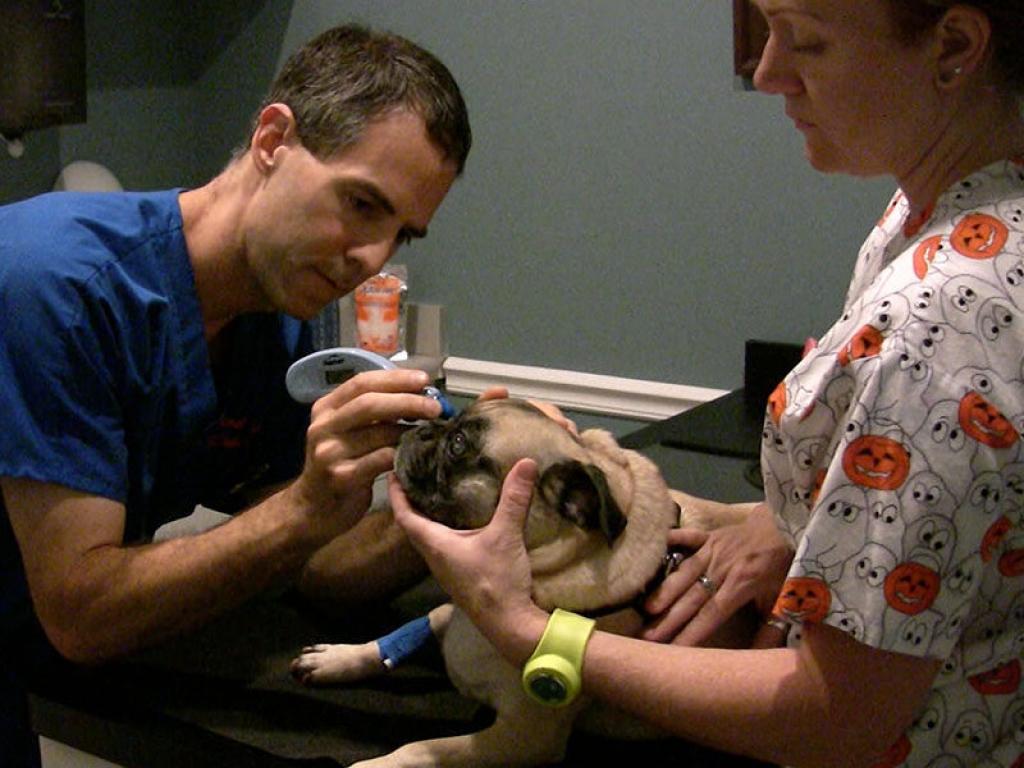
What to expect at your visit
- A close exam of the cornea under high magnification
- A gentle stain test that reveals scratches and ulcers
- A search for the underlying reason it isn't healing
- A treatment plan — from medication to specialized procedures