

Tearing or dry eye
Does your pet have a dull, dry-looking eye with thick discharge?
A dull, dry-looking eye with a thick discharge, redness, and squinting points to a problem with the tear film. A specialist restores your pet's natural eye moisture and comfort.
Signs you might notice
Thick, sticky discharge
Mucus or goopy discharge that keeps coming back
Dull, dry appearance
An eye that's lost its normal shine
Redness and squinting
An irritated, uncomfortable-looking eye
Constant tear staining
Wet or stained fur below the eye
What's really going on
Healthy eyes depend on a steady tear film — it keeps the surface moist, clear, and protected. In dry eye (KCS), the eye stops making enough tears, and the surface becomes irritated, sticky, and vulnerable to damage.
Because the discharge looks like an infection, dry eye is often treated with drop after drop that never fixes the real problem: the missing tears.
How a specialist helps
A specialist measures your pet's actual tear production and examines the surface of the eye for damage. Treatment focuses on restoring natural moisture — usually with medication that stimulates the eye's own tears — so comfort comes back and the surface stays protected long-term.
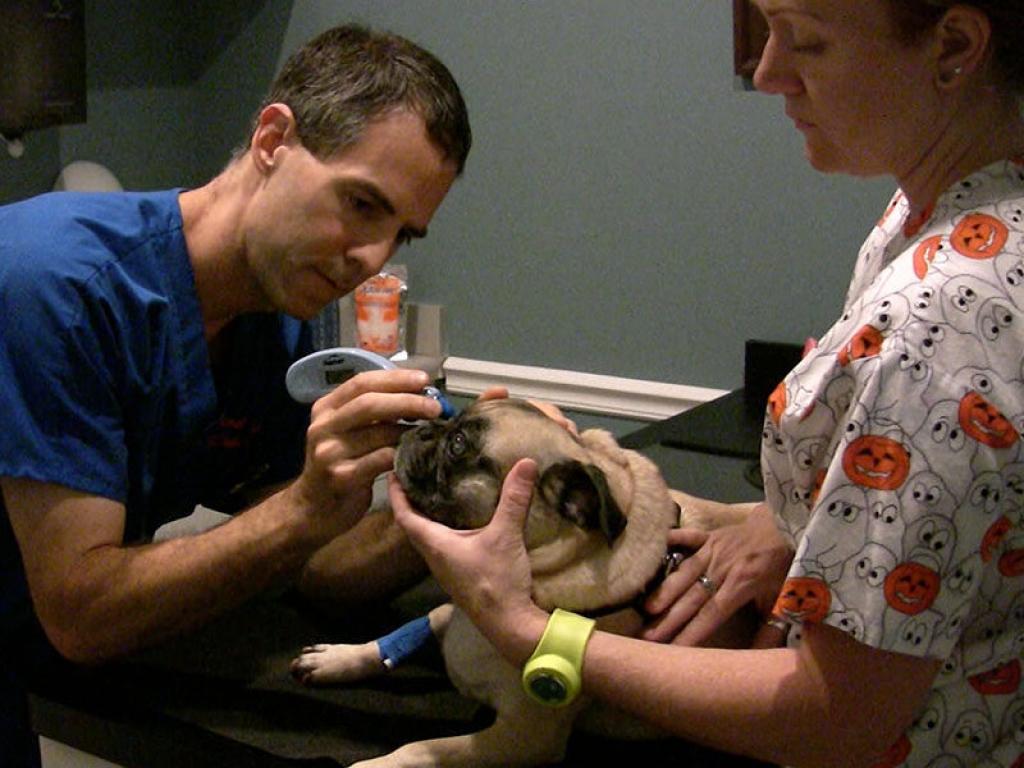
What to expect at your visit
- A simple, gentle test that measures tear production
- A close exam of the eye's surface under magnification
- A clear diagnosis of what's disrupting the tear film
- A treatment plan to restore moisture and comfort